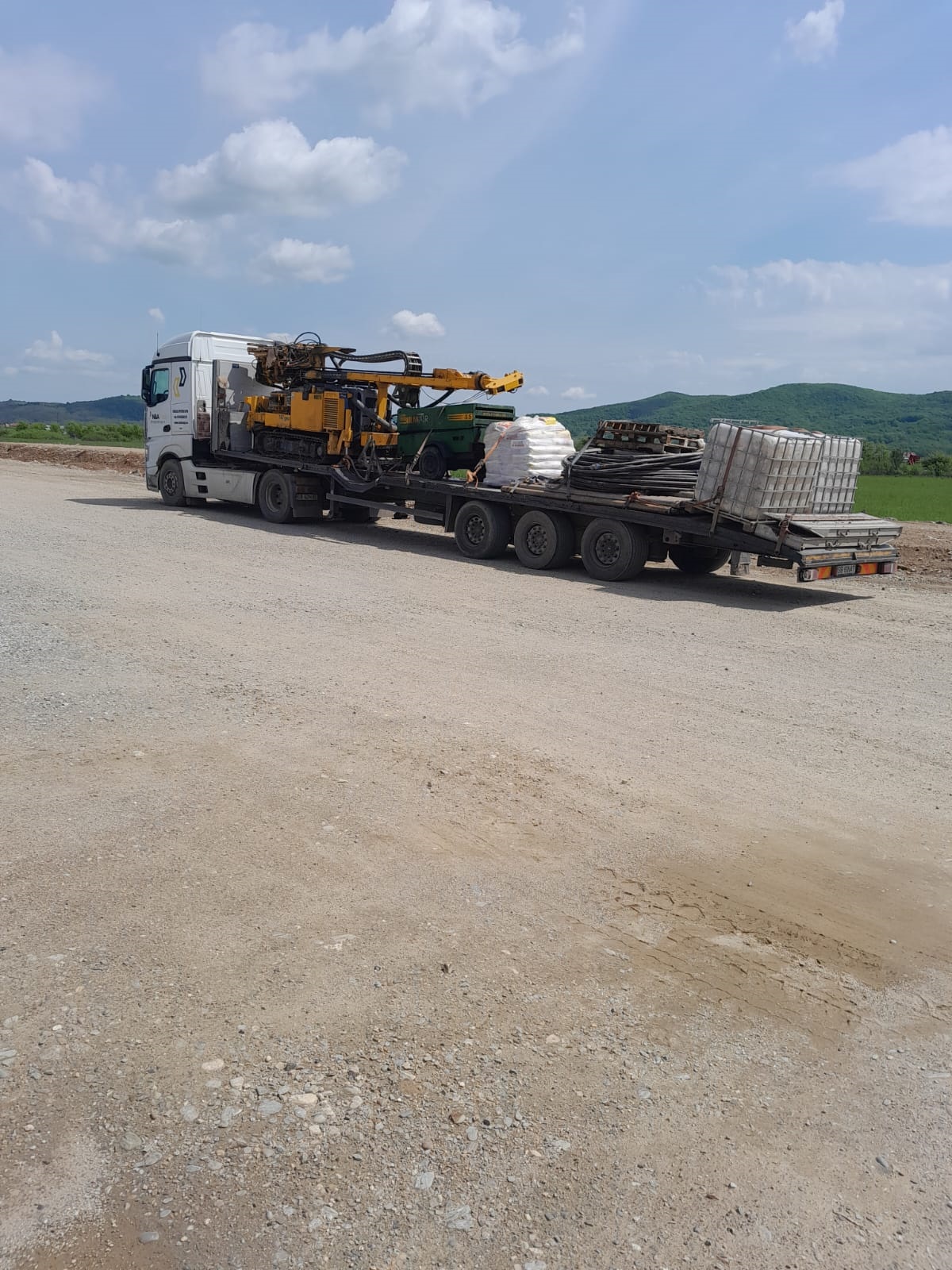
Water well drilling
What a properly drilled well involves — so you know exactly what you are paying for.
Understanding the borehole
It helps to understand what drilling a well involves, so you can supervise the contractor and be sure you get what you pay for. Skipping one or more of the steps below inevitably compromises the result — a durable well and good-quality water.
-
1
Preparatory work
- 1.1
Transport of the drilling rig and auxiliaries; preparing the drill site; rigging up and down.
- 1.2
Digging and covering mud pits for the drilling fluid; preparing the drilling fluid.
- 1.3
Setting up and removing the compressor and the power generator.
- 1.1
-
2
Phase I — drilling the borehole
- 2.1
Drilling the borehole with different diameters over different intervals.
- 2.2
Electrical and radioactive geophysical logging to identify water-bearing sands; casing programme and procurement of casing pipes.
- 2.1
-
3
Phase II — well completion and development
- 3.1
Thinning the drilling fluid by partial replacement with water; installing the PVC filter string, slotted over the intervals indicated by the logs.
- 3.2
Replacing the fluid with water; installing the air-lift pump; washing the well with a 2% sodium tripolyphosphate solution (2-hour reaction time); placing the gravel pack, 3–7 mm or 4–8 mm.
- 3.3
Air-lift pumping to unclog and desand the aquifers.
- 3.4
Checking the gravel pack and placing the clay and cement plug over the required interval (usually 0–15 m).
- 3.1
-
4
Phase III — hydrogeological testing
- 4.1
Installing a submersible test pump and running hydrodynamic efficiency and performance tests to determine aquifer parameters.
- 4.2
Processing the data, calculating hydrogeological parameters and compiling the technical documentation.
- 4.1
What does the technical documentation include?
Execution data, geophysical log results with the aquifer intervals, well development and test results, with the calculated hydrogeological parameters:
The data is compiled in the hydrogeological borehole technical sheet, submitted to the Romanian Waters authority to obtain the Water Management Permit. It is also used to select the right submersible pump and its optimal installation depth.
Work is supervised by specialised staff, from siting through to well development and testing.
Planning a borehole?
Free consultation on location, estimated depth, permits and costs.